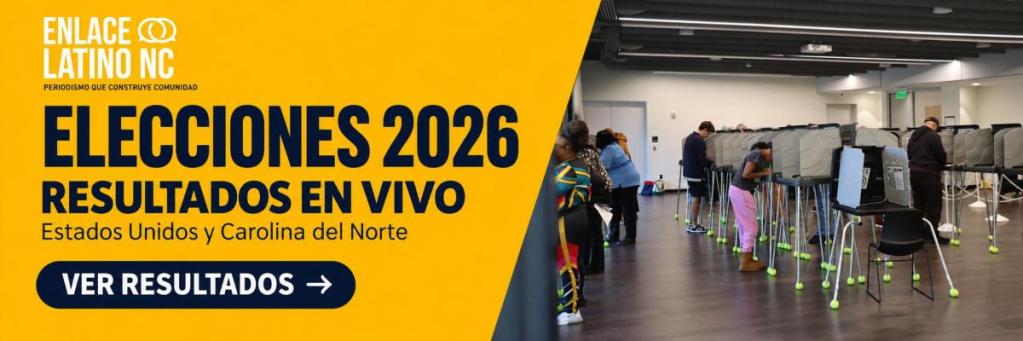
primary elections In North Carolina, they are the process by which political parties select their candidates for the general election.
To participate, it is not enough to simply show up. voting dayThe law establishes clear conditions regarding citizenship, age, residence, and electoral registration.
Furthermore, the type of ballot a person may receive depends on whether they are affiliated with a political party or are listed as an unaffiliated voter.
The rules are administered by the North Carolina State Board of Elections (NCSBE), the official election authority in the state.
Before going to vote, it's important to confirm that you meet all the requirements. Here they are.
What are the basic requirements for voting?

According to the NCSBE, you can vote in a primary election in North Carolina if:
- He is a U.S. citizen, either by birth or naturalization.
- He will be 18 years old by the day of the general election.
- She has lived in North Carolina and in her election precinct at least 30 days before the election.
- He is registered to vote before the deadline set by the state*.
*In North Carolina, voter registration is mandatory. If you are not registered, you will not be able to vote in the primary.
Related: Nonpartisan primaries in North Carolina: what you need to know for March 3, 2026
What happens if you are 17 years old on the day of elementary school?
You can only vote if you will turn 18 before the relevant general election.
In other words, if you are 17 during the primary but will turn 18 before the general election, you can participate. If you will not be 18 by that date, you will not be able to vote.
Who cannot vote?
- People who are not U.S. citizens.
According to Federal Government and the Citizenship and Immigration Services (USCIS)Registering or voting without being a citizen can constitute a crime and have immigration consequences, including the denial of naturalization.
- People who are serving a sentence for a serious crime.
People serving a sentence for a serious crime are also not allowed to vote.
In North Carolina, the right to vote is restored once a person has fully served their sentence, including any period of probation or supervision.
Related: Nadeen Bir advocates for safe and fair schools in Durham
What happens if you are affiliated with a political party?
If you are registered as a Democrat, Republican, or another recognized party, you can only vote in your own party's primary.
For example, a voter registered as a Democrat can only receive the Democratic ballot; one registered as a Republican can only receive the Republican ballot.
Some recognized parties in North Carolina may not have a primary in certain election cycles.
Can you vote if you are not affiliated with any party?
Yes. In North Carolina, voters registered as “unaffiliated” can choose either the ballot of one of the parties holding a primary that day or a nonpartisan ballot, if available.
Voting in more than one party primary in the same election is not permitted.
Related: Until when can you register to vote and deadlines for the 2026 North Carolina primaries
What should you do if you have doubts about whether you are registered or eligible to vote?
If you are unsure whether you are registered to vote, whether your party affiliation is correct, or whether you meet all the requirements to participate in the primary elections, you can verify your official information on the website of the North Carolina State Board of Elections.
On that page, in addition to confirming your registration status, you can:
- Find your assigned polling place and your available ballot for the primary.
- Check if your registration is up to date correctly.
- Finding tools like “Voter Search” (voter search engine) to check your personal information in the electoral system.
- Get contact and assistance if you need to resolve doubts or correct your registration.