
In agricultural fields, Immigration and Customs Enforcement (ICE) officers can burst in during the day and leave workers with immediate questions. How should I behave? How far can the agents go? What can they ask me? What should I do when they leave? What if they arrest me?
The key, as established by the recommendations For farmworkers at the University of Davis, it is clear what are your basic rights and what steps you should take before, during, and after an ICE raid in the countryside.
Preparing emergency contacts, distinguishing between public and private areas of the workplace, and knowing when to exercise your right to remain silent can make all the difference. With this information at hand, it's easier to avoid hasty decisions and protect yourself.
How to prepare for an ICE raid in the countryside?
Preparing ahead of time reduces the margin for error when stress is at stake. Have trusted contacts on hand, talk to your employer about internal protocols, and define an emergency plan.
- Identify a immigration lawyer and memorize your number and that of a close relative.
- Ask your supervisor what the company's plan is if ICE arrives in the field and update your emergency contact information with your employer.
What to do during the raid?
During an operation, the rule is to lower your anxiety and act calmly. Don't run: officers can use this as a reason to detain you. Ask clearly if you're under arrest or free to go. If you're told you can leave, leave without confrontation. And remember: you have the right to remain silent.
- Say, "I want to remain silent." You don't have to say where you were born, how you came to the country, or whether you have papers.
- Do not show any ID or documents and do not sign anything at this time.
Where to position yourself during the operation?
Stay in private work areas. Without a court orderICE cannot enter private spaces, and it is illegal for employers to authorize their entry into those areas. Private areas include, for example, vegetable gardens, greenhouses, personal areas, and break rooms.
ICE agents, however, are allowed to enter public areas such as the office entrance or parking lot.
If you are a foreman or supervisor
Your role is key to not escalating the situation. Don't interfere with officers or provide information about the workers. Avoid any action that separates people based on their status or country of origin. If someone is detained, ask where they are being taken. Workers can leave at any time: don't say they can't leave.
Related: What to do if ICE comes to your workplace?
What to do if ICE detains you?
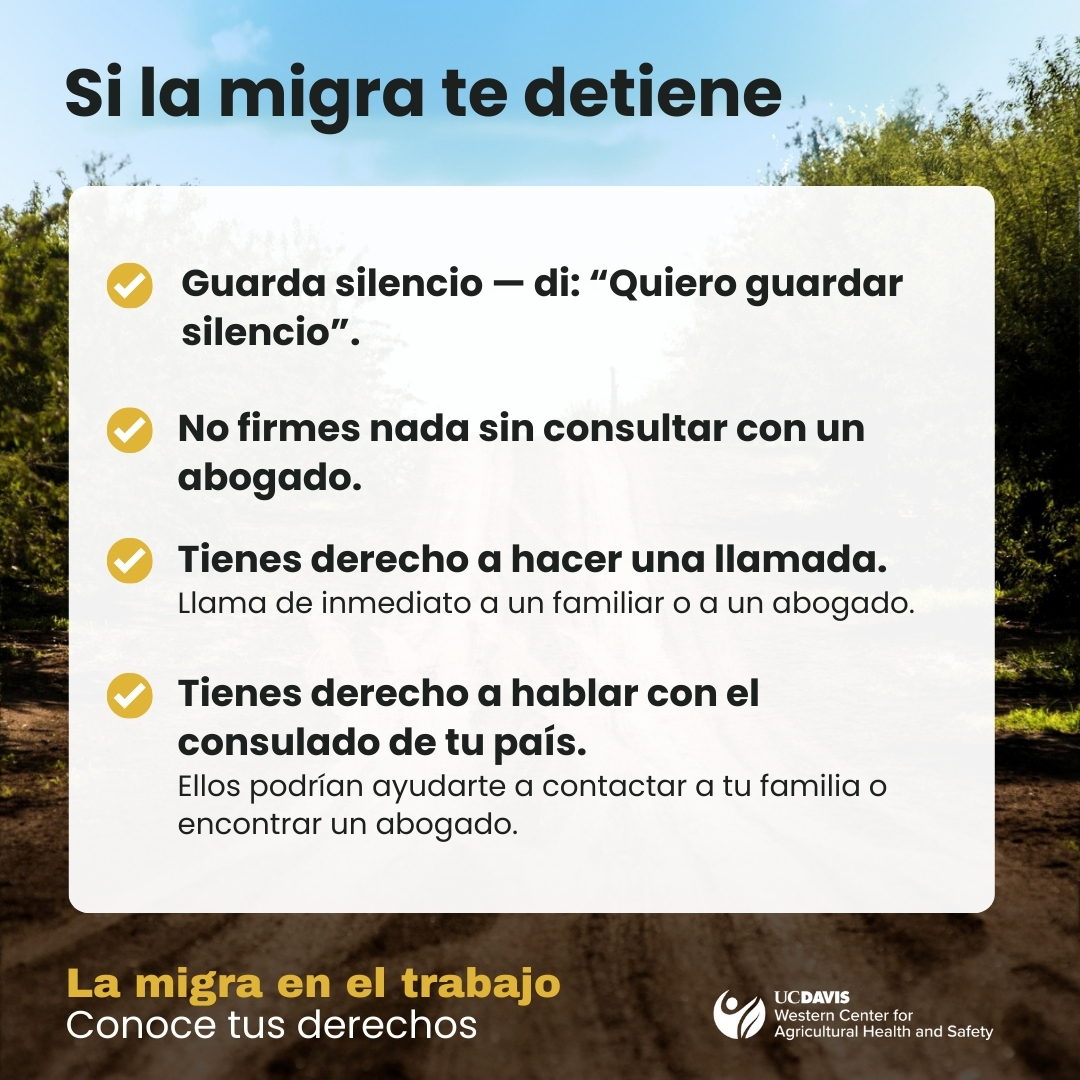
One of the possibilities during an immigration operation in the field is that ICE agents will put you in custody. in custodyIf that happens, the first step is to protect your basic rights.
Reiterate your desire to remain silent and avoid signing documents without legal advice. You have the right to a call and contact your country's consulate, which can help you. contact your family or locate legal assistance.
What to do after the raid?
When the operation is over, memory can be mixed with fear. That's why it's a good idea to record what you saw and heard as soon as possible.
Write down who was detained and where they were taken, which agency was involved, how many officers were present, what they were dressed in, whether they were armed, and whether they prevented you from moving or leaving. Also, record any mistreatment you observed. Share these notes, videos, or photos with the company, your legal team, or the community organization supporting you.