
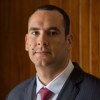

North Carolina, Durham – The recognition of rights contributes to generating the minimum conditions for the comprehensive development of people within a framework of equality before the law and respect for their dignity and identity as human beings. However, for Cristina Morales, a transsexual immigrant woman of Mexican origin, the political and regulatory changes that today reach and protect the LGBTQ+ community, particularly trans people, are a “privilege.”
Cristina became a reference and symbol of the social movement to fight discrimination and for the rights of the transsexual community in North Carolina. Cristina's activism began when she dared to raise her voice ten years ago at the Mexican consular offices in Raleigh, capital of North Carolina.
In 2012, Cristina Morales was involved in a confrontation with officials from the Mexican Consulate in Raleigh who demanded that she remove her makeup in order to renew her passport.
His image did not match the registration data. In the eyes of consular officials, your identity and your rights were not more important than the regulations and the system.
"I arrived early. When I passed by the person who helped me, the controversy began. 'Your name does not correspond to your image,' he told me. That's where the fight started. “Everyone realized what was happening.”
Immediately, they called the person responsible for the service desks.
“He behaved in an arrogant and rude manner. She ordered me to remove my makeup.”
However, years before, Cristina had completed the same procedure, in the same consular offices, but under very different conditions.
“If I hadn't had a problem before, why now?” Cristina questioned.
The officials could not justify themselves or give him an answer.
“They got upset and the intervention of the consul was necessary, who did behave in a friendly manner. He allowed me to take the photo with makeup and only asked me to take off my earrings, like any other person.”
Cristina: symbol of fight and change
The story of Cristina Morales escalated to the local media and unintentionally became a reference for the immigrant transsexual community and the incipient fight for their rights in the triangle area.
“After that incident, I heard that other people had had the same problem. I was contacted by Wake Forest University who was doing a study with the trans community and they invited me to collaborate. I told them yes.”
Cristina served as a liaison between the community and the university.
“I gathered ten girls, the community had grown, and we worked in the studio. We had sessions on Sundays, we talked about the barriers and problems we face as a community.”
Once the study was completed, Cristina points out, the community organized a forum with the participation of local clinics, consular officials, social organizations and police forces.
“It was quite big, it was when the consulate opened and saw the possibility of speaking and educating its people. Then community clinics came, they approached, to help in the process and began to provide services to the girls.”
The awareness and preparation of consular officials came hand in hand with the demand and push for regulatory changes, which began to be consolidated a decade later.
In February of this year, Mexican consular offices began offering transgender immigrants of Mexican origin the possibility of obtaining birth certificates for gender identity recognition. Which means that trans people can change the name that was registered by their parents in the Civil Registry at the time of birth, for the name with which they identify themselves and, from then on, renew all their personal documents.

Roxana Picazo, LGBTQ+ community specialist at The Hispanic Center (ECH) and who is part of a new generation of local activists, is aware that the fight for the recognition of their rights began with people like Cristina.
“Cristina is a person who, in one way or another, has left a legacy to the transgender community. She is an excellent person, who has fought for our community,” Roxana told Enlace Latino NC.
Today, Roxana holds the same position that Cristina held as an LGBTQ+ specialist at ECH before taking on new administrative duties.
Roxana was one of the girls who were part of the collective of immigrant transsexual women called Entre Nosotras, sponsored by ECH based in Durham and coordinated by Cristina Morales.
“(Cristina) called us to motivate us to always be there, supporting and looking for the community, doing the things that our community needed. She was the person who connected me with hormonal treatments in 2015, that's where I started my treatment and helped me access many other things.”
Roxana, together with Elsa Huerta, coordinator of ECH's LGBTQ+ programs, accompanied each of the transsexual people who chose to change their name at the Mexican Consulate in recent weeks.
For Roxana and Elsa, Cristina's experience, like that of many other people who began the fight for the recognition of the rights of the LGBTQ+ community in the United States, will always be valid.
Live in peace
Cristina Morales arrived in North Carolina from Mexico City, one of the largest Latin American cities, still with patriarchal roots, motivated by two friends who traveled to the country a couple of years before.
He was almost 30 years old and was looking for much more than the economic stability, entrepreneurial opportunities and quality of life that immigrants who cross the border between Mexico and the United States dream of.
Cristina aspired to live in peace, to be able to leave her house without feeling that her life would be in danger or she would be a victim of violence due to her condition as a transsexual woman.
However, he settled in a small city in one of the most conservative states in the South of the United States, where he also suffered discrimination, mainly from the undocumented population of Latino origin.
“24 years ago, Durham was not a very populated city, there was not much infrastructure, it was practically a small town,” recalls Cristina, who encountered the first barriers in language and access to job opportunities.
Furthermore, unlike Mexico City, where there is a massive public transportation system in high demand, in North Carolina it was almost impossible to get from one place to another without a private vehicle.
“There wasn't much of a trans community either. At that time there were about three of us in the entire triangle area, and at times we coincided.”
The year was 1997, the Latino community in Durham was still small.
“The situation was very difficult in those years. There was discrimination, a lot of discrimination, and it was not easy to get a job. Accessing medical treatment was impossible, we had to get products from Mexico, as we say, 'underwater', and we self-medicated."
Reinvent yourself: Cristina's challenge in the United States
With no job options and the need to generate income, Cristina began cutting hair at home, after all, she already knew the job. In Mexico she worked as a stylist until the day she decided to emigrate.
In her native country, Cristina Morales had studied Biology at the Autonomous University of Mexico and Public Accounting at the Banking and Commercial School, but, finally, she opted for aesthetics and working with her own hands.
His family always offered him “understanding, understanding and acceptance.”
“Since I opened up to them I have never received rejection or discrimination. That is an important foundation, that your family supports you. That makes you a successful person, because when your family rejects you, you always hold resentment.”
But in the United States she was alone and dependent on herself.
“When I got here I had no one.” For the first time, he was away from home and from his mother, whom he remembers as her “greatest example and support.”
At the same time, he got a job with a cleaning company that, in turn, was a contractor for other companies in the area. That's how he started working as housekeeping at the former IBM facility in Durham.
All his co-workers were Latino and the signs of intolerance, disrespect and discrimination were recurring, but he continued working and met Cecilia, a woman of Cuban origin who helped him get a new job.
Two years had already passed when he began working with the company OEO Tecnology Solutions, which had part of its laboratories in the same building. The work environment and conditions improved significantly.
For the first time in his life he was offered to change his name. The person who assisted her in the Human Resources office noticed that her image did not correspond to the name on her personal documents, so she naturally asked her what name she wanted to use on her work ID. she.
“Christina! And so she stayed. “I chose it without thinking about it, for nothing in particular.”
Her new job gave her stability and recognition as a person, with the gender with which she always perceived herself. She always felt supported and she took advantage of the time to take English classes at Durham Technical Community College.
“I was able to have health insurance, start going to the clinic and have access to hormones, although at that time it was not so easy to obtain them, but the doctor helped me. “It was already something controlled and monitored by a doctor.”
For six years he worked for the same company, but everything changed in 2001 for the undocumented immigrant population. The terrorist attacks of September 11 caused a worsening of immigration policies and companies began to verify the documents and certificates of their employees.
Like many undocumented workers, Cristina lost her job.
“When I left there I faced reality again. It was very difficult to get a job. At that time you had to pay for false documents and the problem came at the time of the interview.”
For an undocumented transgender immigrant, everything was more difficult.
“I dedicated myself again to working as a stylist. I got my license, passed the exams, and met all state requirements. That was my modus vivendi, working in salons, in many places at the same time.”
The West Coast
In 2013, Cristina Morales decided to move to San Francisco, California, with the sole purpose of fixing her immigration situation. In North Carolina, racism and discrimination against immigrants was accentuated.
“They were difficult times. They would stop you for a traffic violation and you could be deported, it all depended on how racist the police officer was.”
Uncertainty and, again, fear, motivated Cristina to investigate how she could regularize her situation. She sought advice, spoke with lawyers and contacted civil organizations that support the immigrant community.
Running a nursing home in North Carolina was difficult and extremely expensive.
“Moving to another state was not what I wanted,” Cristina remembers, but she did it. Her personal exodus took her to the West Coast, where she stayed for just over a year, between October 2013 and Christmas 2014.
“It's another world, it's like you enter another dimension. A state (California) where all people matter and the transgender community receives psychological and medical help. You can do a lot of things that the state pays for.”
Before traveling to California, Cristina contacted an organization and attorney Noemi Calonje took her case for free. She traveled with a friend and together they began to “navigate the system,” but “it was easy, there is no discrimination.”
Cristina was able to continue her clinical treatment and was linked to community groups. There, in California, she learned how the system works and offers free and effective help to the transgender population.
“You can have any operation and receive therapy at no cost, everything is paid for by the state,” however, Cristina, accustomed to working, has a critical reading.
“People get used to living off the state, they don't make an effort. It's one of the things I didn't like, apart from the fact that it's too expensive, the rents are stratospheric. “He lived with eight other people in the same house and shared a room with two.”
Cristina's purpose was to fix her immigration situation. She did not want to stay in California, but her lawyer warned her that the political asylum process would take time. They were to present her case to court and wait for a hearing.
The application process took about five months. His case was finally transferred to the Arlington courthouse, in North Carolina, where he had his interview. Her former co-worker Eliazar Posada accompanied her and served as an interpreter.
He waited a few months and finally the United States government granted him political asylum in 2017. A year later, he applied for residency.
“When you ask for asylum you renounce your country, because your life is in danger. They give you a new identity.” However, Cristina Morales defines herself as “proudly chilanga,” as the residents of Mexico City are colloquially called.
Injustice as a trigger for change
North Carolina is still a conservative state, but, in Cristina's eyes, “there is quite a big advance compared to 24 years ago,” since the LGBTQ+ community in general “enjoys privileges” that people like her fought for. before.
But how much has the situation changed for the immigrant transgender population in the South of the United States? For Cristina, “the difference is abysmal.”
“Now there is a lot of acceptance and laws that protect and take care of you. All medical care. There are cities, states, that help you with sex reassignment. "The police no longer discriminate like before."
Today, Cristina highlights, girls of Mexican origin can change their data in the Civil Registry from a consular office, but “it was a process.”
“Before it was difficult and expensive, impossible to do. Many girls did not have the money to do so or their immigration status did not allow them to travel.”
The mentality, she affirms, “is changing,” but discrimination and injustices persist, which, for Cristina, are the fuel of social struggle.
" I do not like the injustice. I don't like injustices being done to people. I had that mishap at the Consulate, but that was going to happen to anyone.”
Her time in California and her personal experience dealing with the administrative and legal system motivated her to work for her community in North Carolina, where she found an opportunity at ECH.
“When I saw the experience in San Francisco and came back here, I thought I could do it.” The person who coordinated the trans women's group at ECH left the position vacant and Cristina took on the challenge.
“I had the tools to meet people and get into places. The job helped me achieve many things for the community, knocking on doors of clinics in Durham, for example.”
The effort, she confidently states, “was worth it,” but she never imagined that her work would be recognized in other states where company notes were published and she was invited by social organizations to share her experience.
Cristina Morales made Durham her home. Here she met her husband, with whom she has already been for four years, and continues to work in the administrative area of ECH.
Despite the distance, he maintains permanent contact with his father and two sisters who live in Mexico, also with his brother in Texas, and a half-sister who moved to North Carolina with her two children.
“How lucky I have been to do all this and help many people, I hope it serves as an example for others. The little or much that I have done has left me with a lot of satisfaction.”

PODCAST
After the storm
A year ago, Hurricane Helene struck western North Carolina. The Latino community responded with something stronger than the storm: solidarity.
🎧 In this episode, learn how Latino organizations transformed crisis into resilience.
▶️Press play to listen!


